Watch the Tamkeen AI City presentation, then explore the project and its areas of focus below.
Full presentation · 10 minutes — use the player controls for sound and full screen.
FROM VISION TO CONCEPT
A city designed around the future
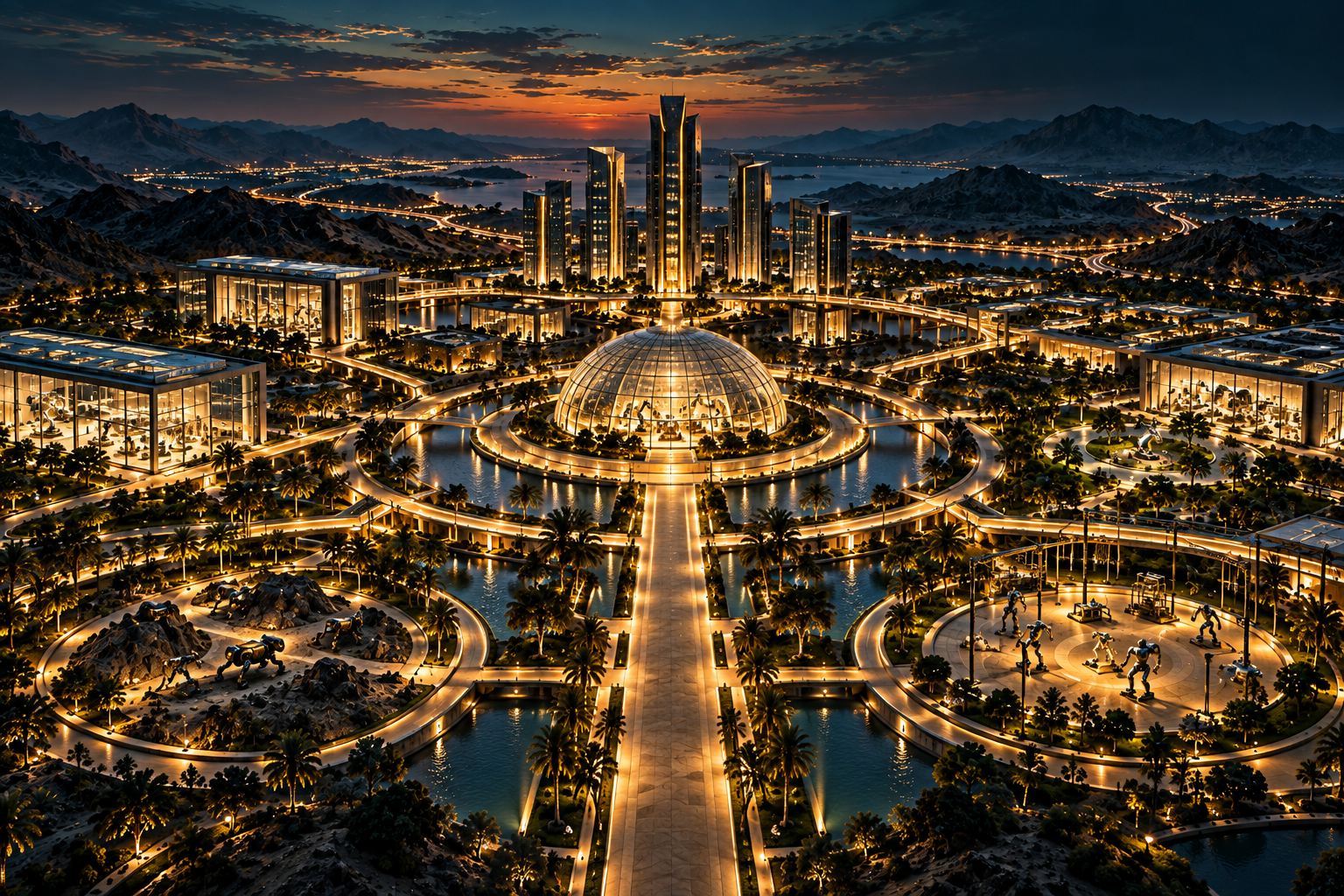
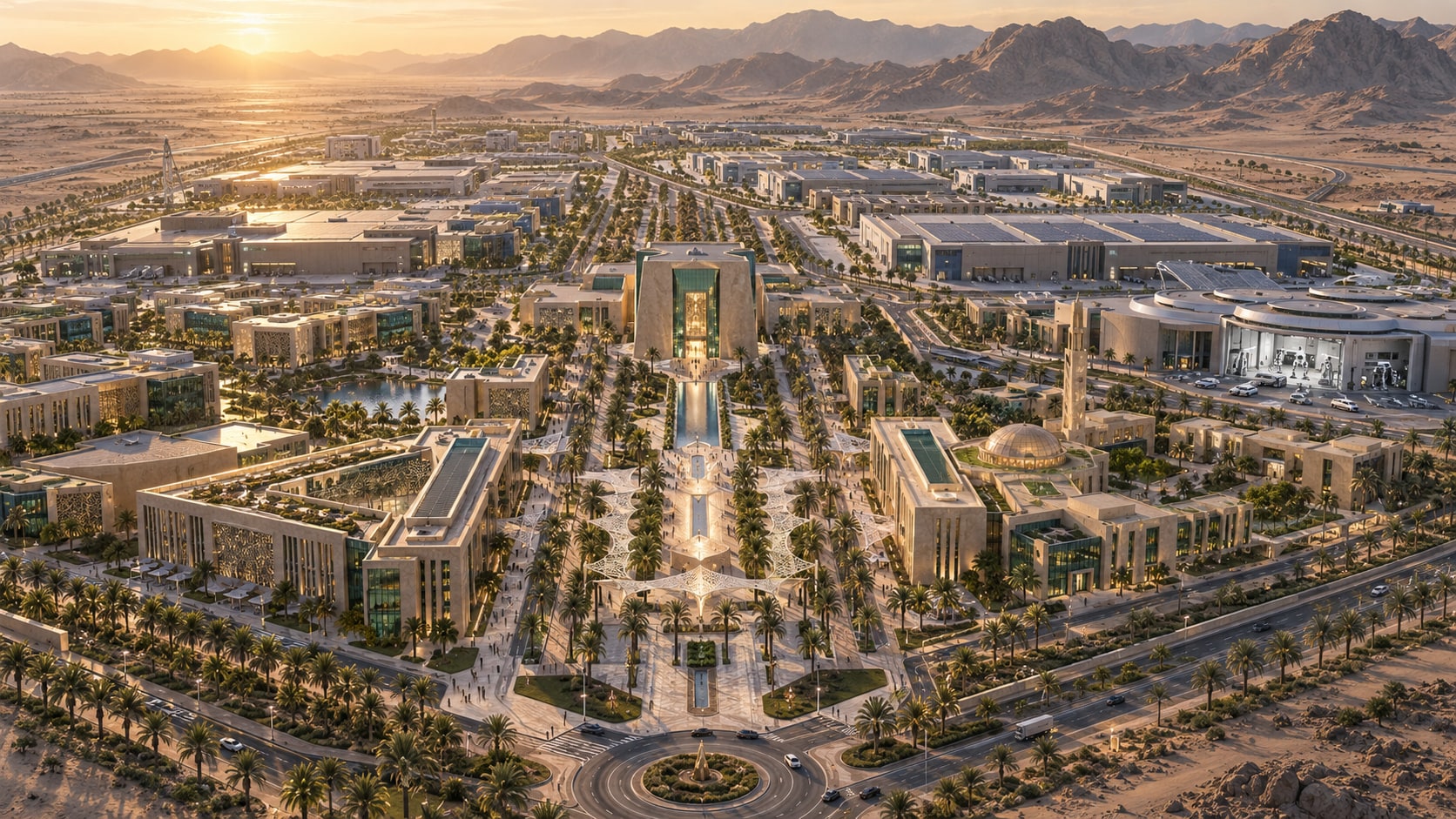
A visual journey inspired by the Tamkeen City presentation: from robot manufacturing to identity, operation and maintenance, and from research to people and everyday life.
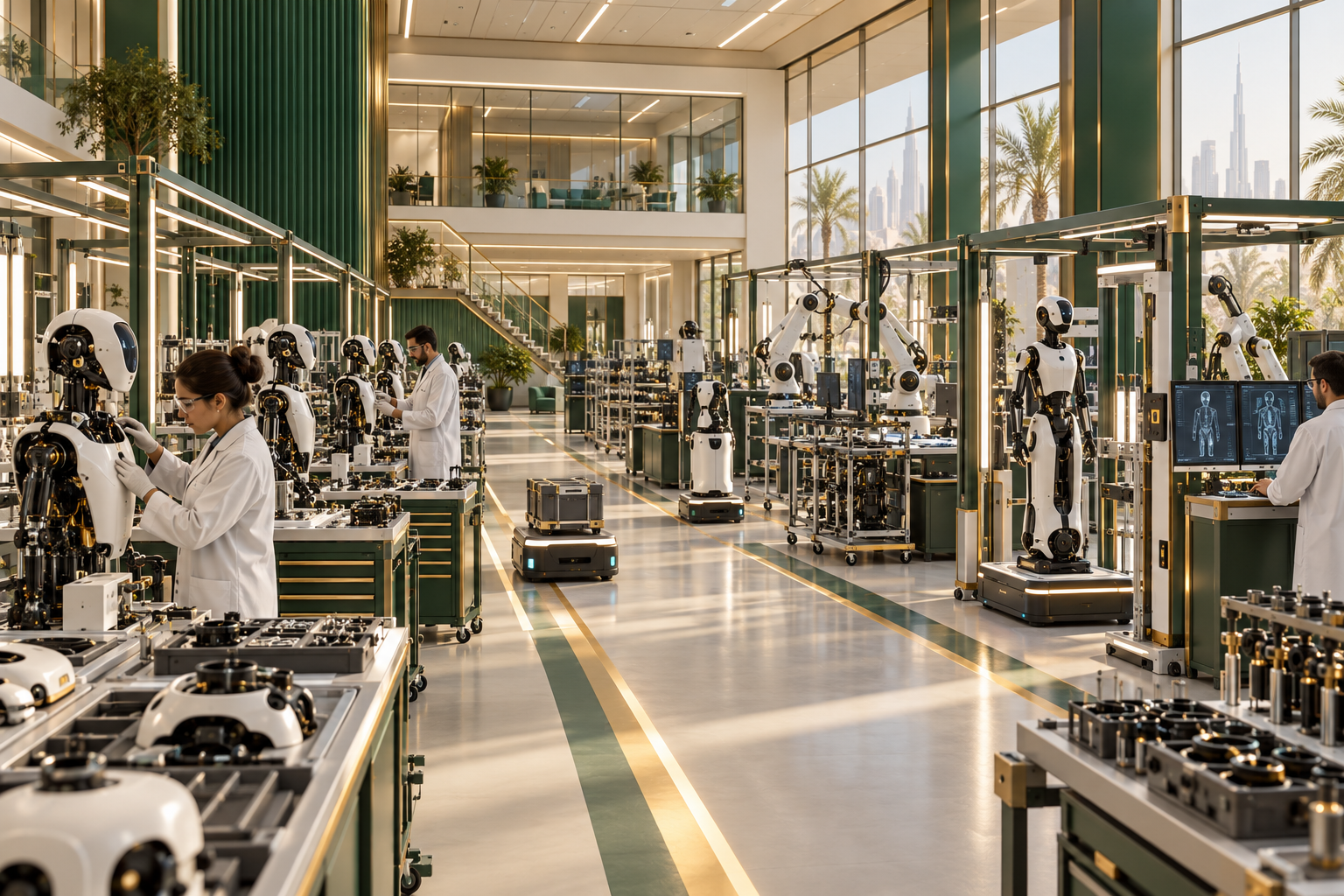
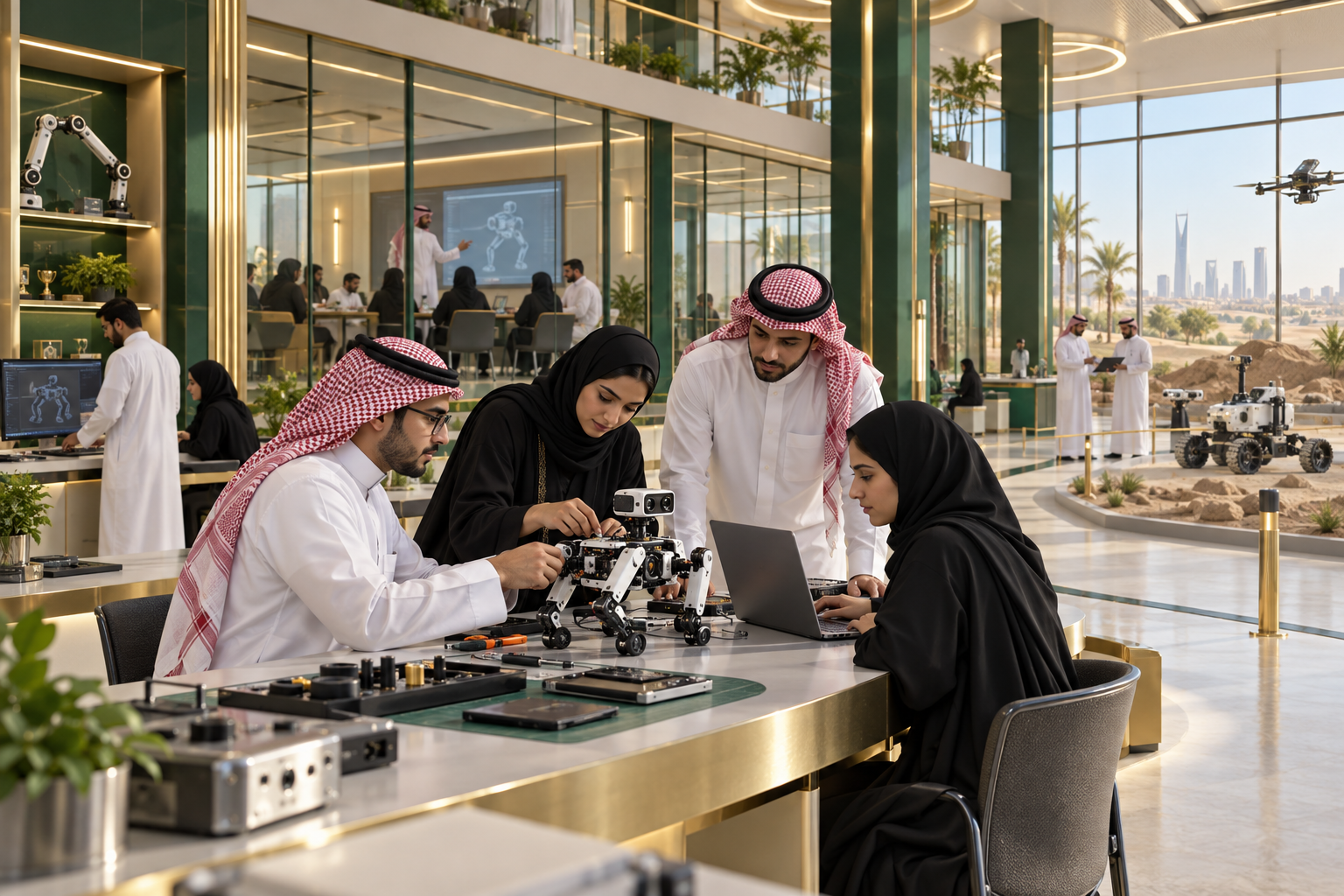
AI-generated future concept · The architectural composition is illustrative, not an approved engineering plan.
One city. A connected lifecycle.
An ambition to create a Saudi technology and industrial environment bringing together manufacturing, maintenance, command and control, research, education, digital language, logistics and cybersecurity. A project under development and study, aiming to build knowledge, local capabilities and innovation.
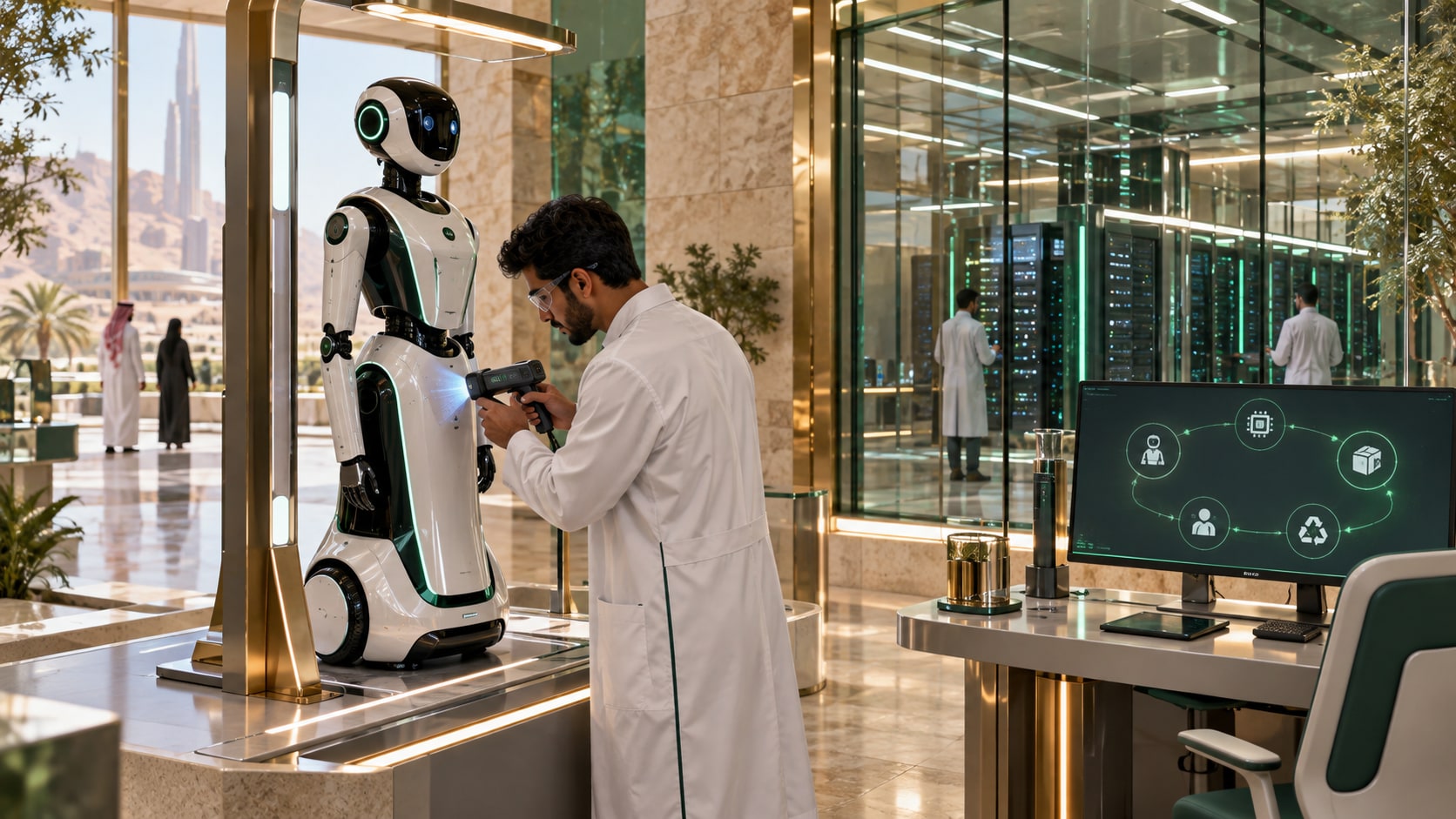
01 / The robot hospital
A complete journey back to readiness
Proposed facility concept
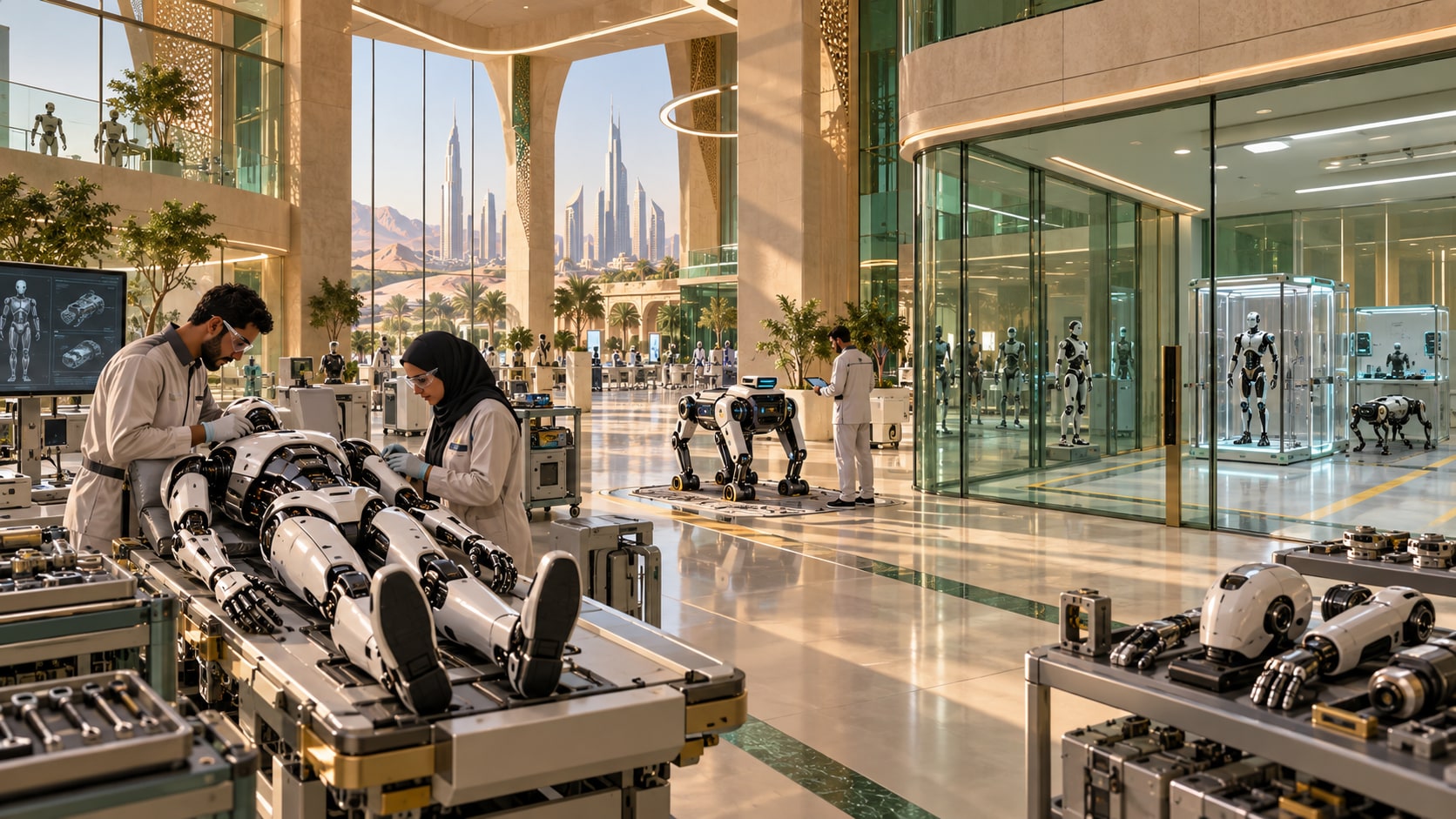
A specialist engineering facility is envisioned to receive damaged or faulty robots, diagnose mechanical, electronic and software problems, and rehabilitate and test each unit before its return to service.
Intake and diagnosis
Initial assessment, emergency fault response and intensive engineering care for severely damaged units identify the cause and repair route.
Repair and reprogramming
Mechanical and electronic repairs, system and software maintenance, reprogramming and component replacement supported by a spare-parts bank.
Isolation and security inspection
Attack and intrusion inspection, isolation of suspicious robots, root-cause analysis and technical cleaning.
Testing and return to service
Post-repair technical and operational testing, followed by readiness verification before a robot resumes its tasks.
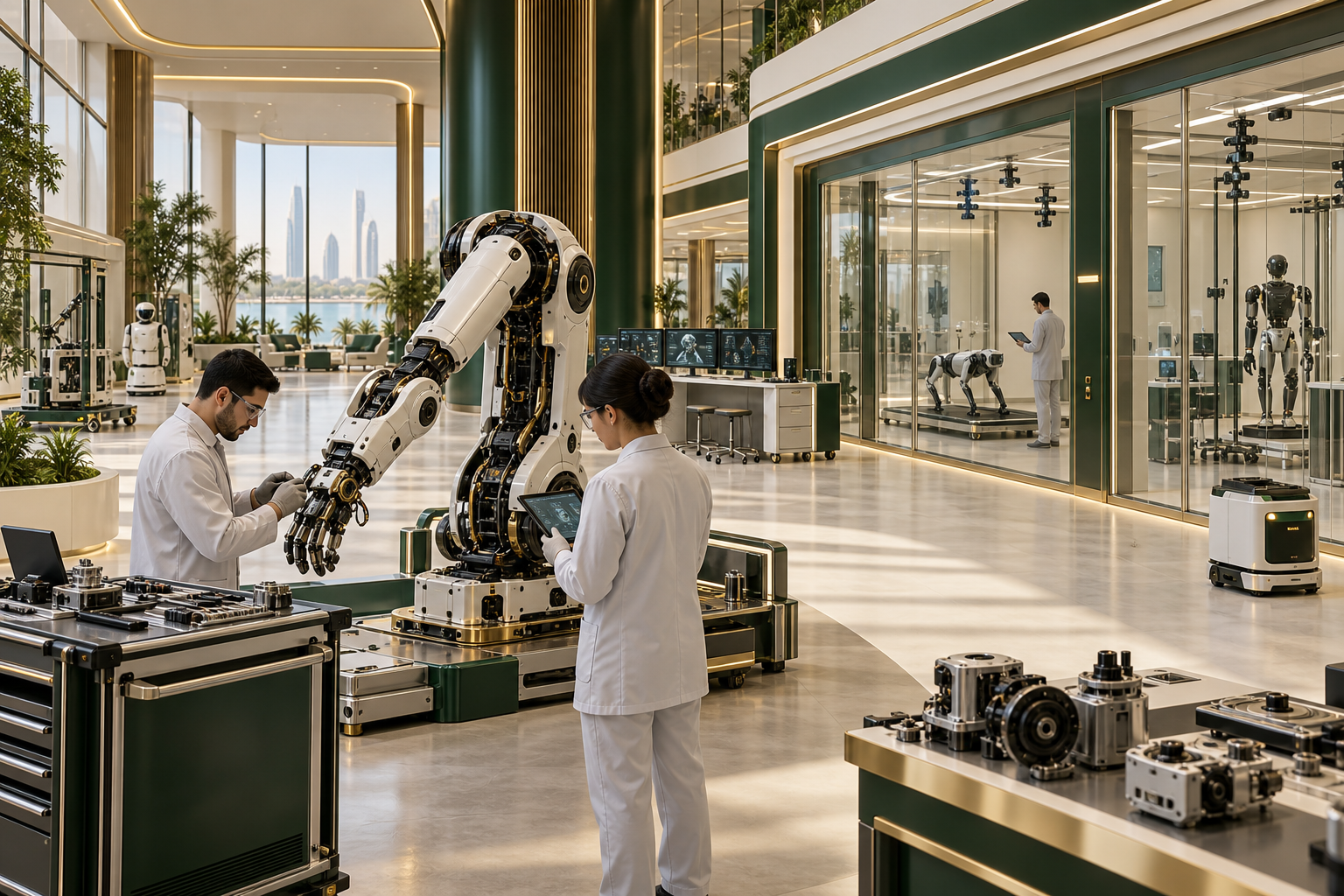
02 / Advanced manufacturing campus
From components to intelligent systems
Proposed facility concept
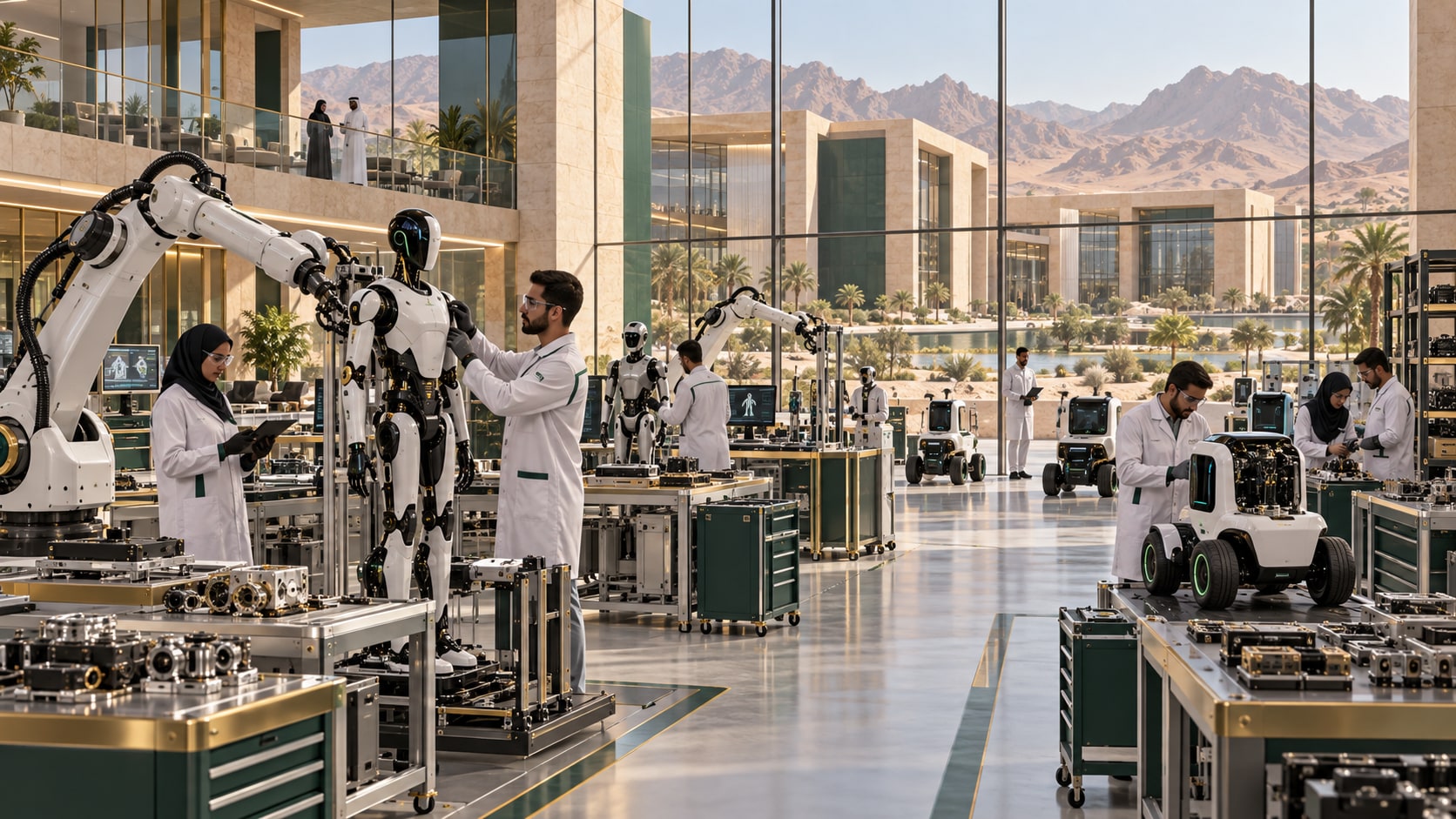
Specialist factories form a connected value chain intended to localize production, strengthen local content and reduce dependence on external components. The project profile proposes five manufacturing streams for phased development.
Robotics and AI
Robot manufacturing, assembly and integration of components and control systems within a connected production environment.
Servers and computing systems
Computing infrastructure supporting AI applications and intelligent operations.
Semiconductors
A phased advanced development stream for electronic chips, microcontrollers and critical components.
Smart displays
Displays and interfaces for products, facilities and intelligent systems.
Fiber-optic cables
Connectivity components linking city facilities and supporting its digital infrastructure.
03 / Research and development
Creating knowledge. Advancing innovation.
Proposed facility concept
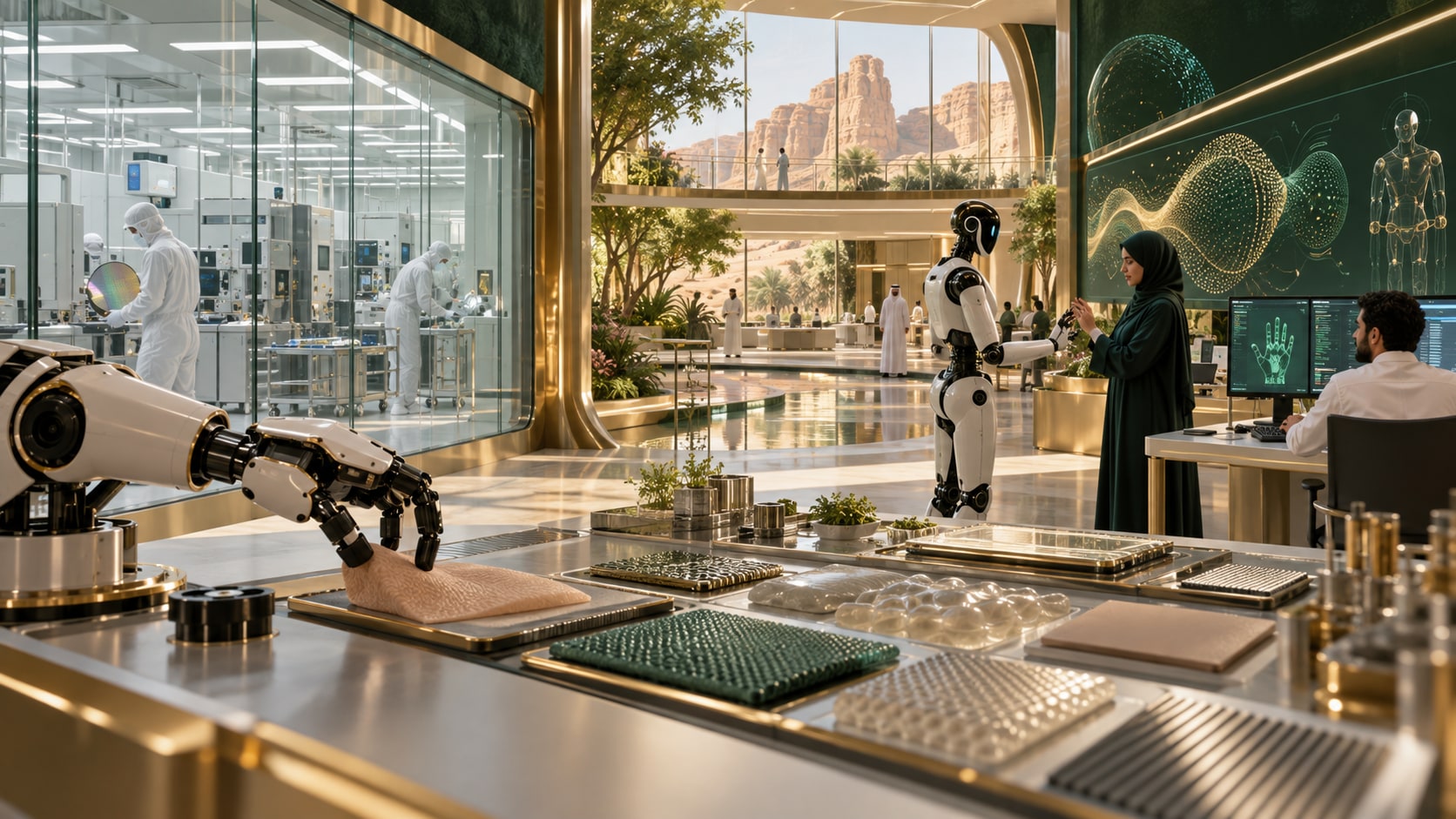
The concept connects research with industrial application, enabling the city to develop knowledge, intellectual property and technical prototypes alongside operations and manufacturing.
Semiconductor research
Research into critical components and solutions supporting manufacturing and technological autonomy.
Digital language center
Collecting and organizing robot-derived language content from within Saudi Arabia into a digital lexicon, developing language models and growing national linguistic assets.
Synthetic skin and human interaction
Research into synthetic skin, human–robot interaction and human responses and reactions.
04 / Tamkeen scientific college
The people who will build and operate the city
Proposed facility concept
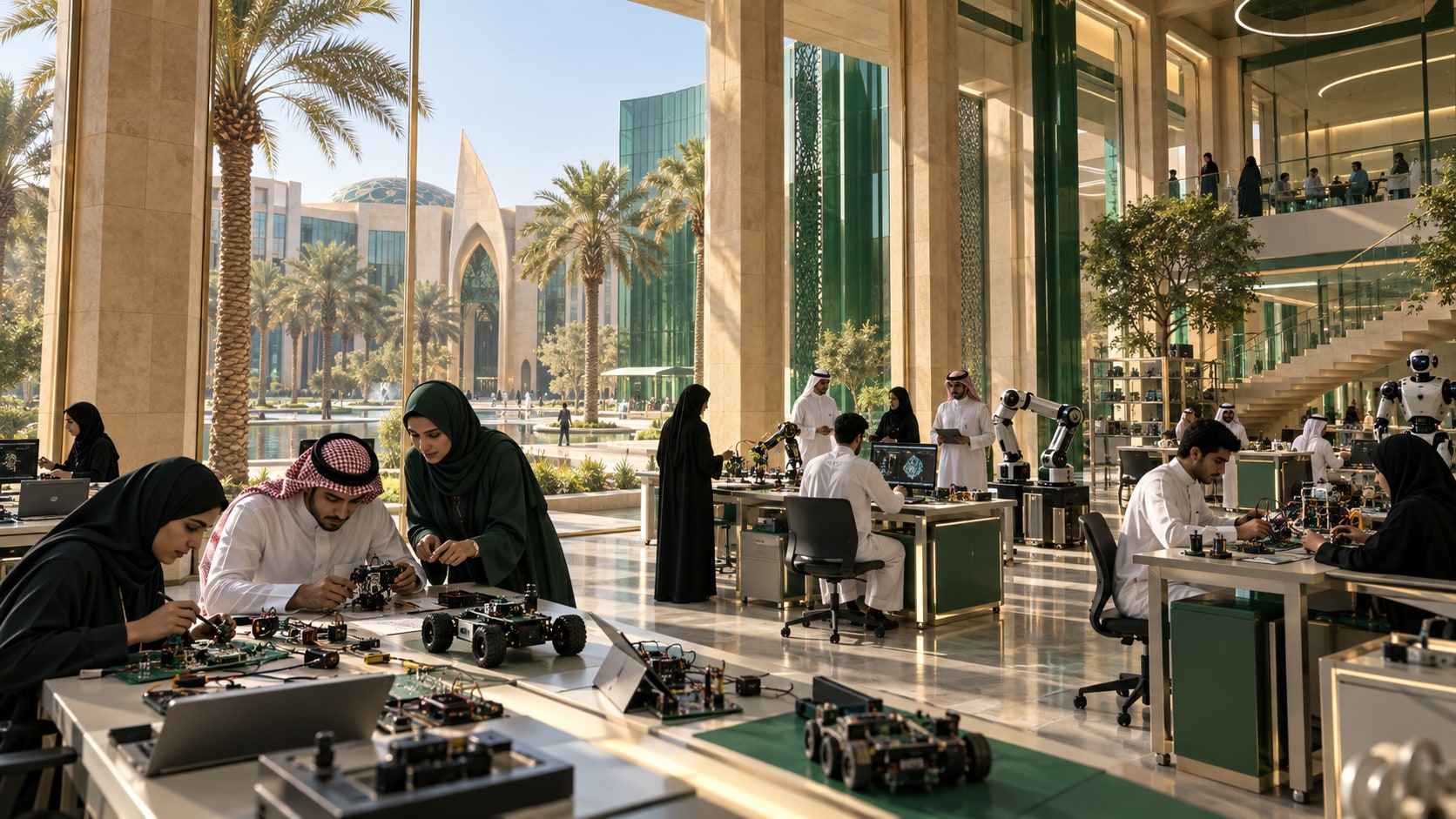
The academic sector aims to prepare Saudi professionals for design, operations, development, control, security and manufacturing, connecting education with laboratories and industrial needs for long-term project sustainability.
Intelligence and data
Artificial intelligence, data science and machine learning.
Systems engineering
Robotics, software, electronics, embedded systems and smart manufacturing.
Supporting scientific centers
Centers for cybersecurity, technology engineering and advanced industries connect knowledge to practice.
05 / Smart services and city life
Where people experience intelligent technology
Proposed facility concept
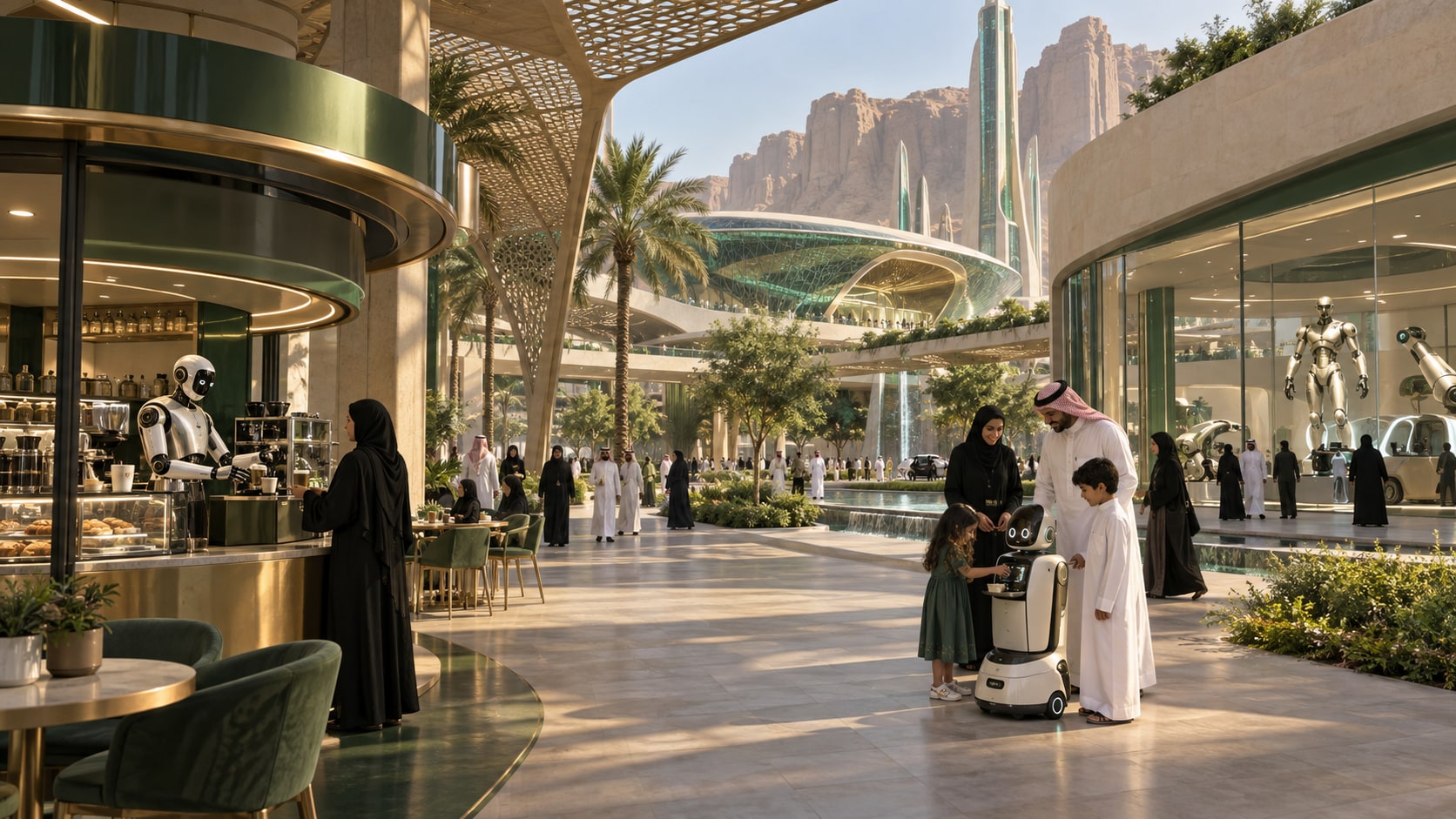
A public-facing district for residents, visitors, tourists and beneficiary organizations makes robotics and AI part of everyday city experiences and connects solutions with customer needs.
Cafés and dining
Robot-operated cafés and restaurants offering intelligent service experiences.
Showrooms and retail
Robot showrooms and retail spaces for AI products and intelligent solutions.
Visitor experiences
Hands-on demonstrations, discovery spaces and recreational experiences introduce technology to the public.
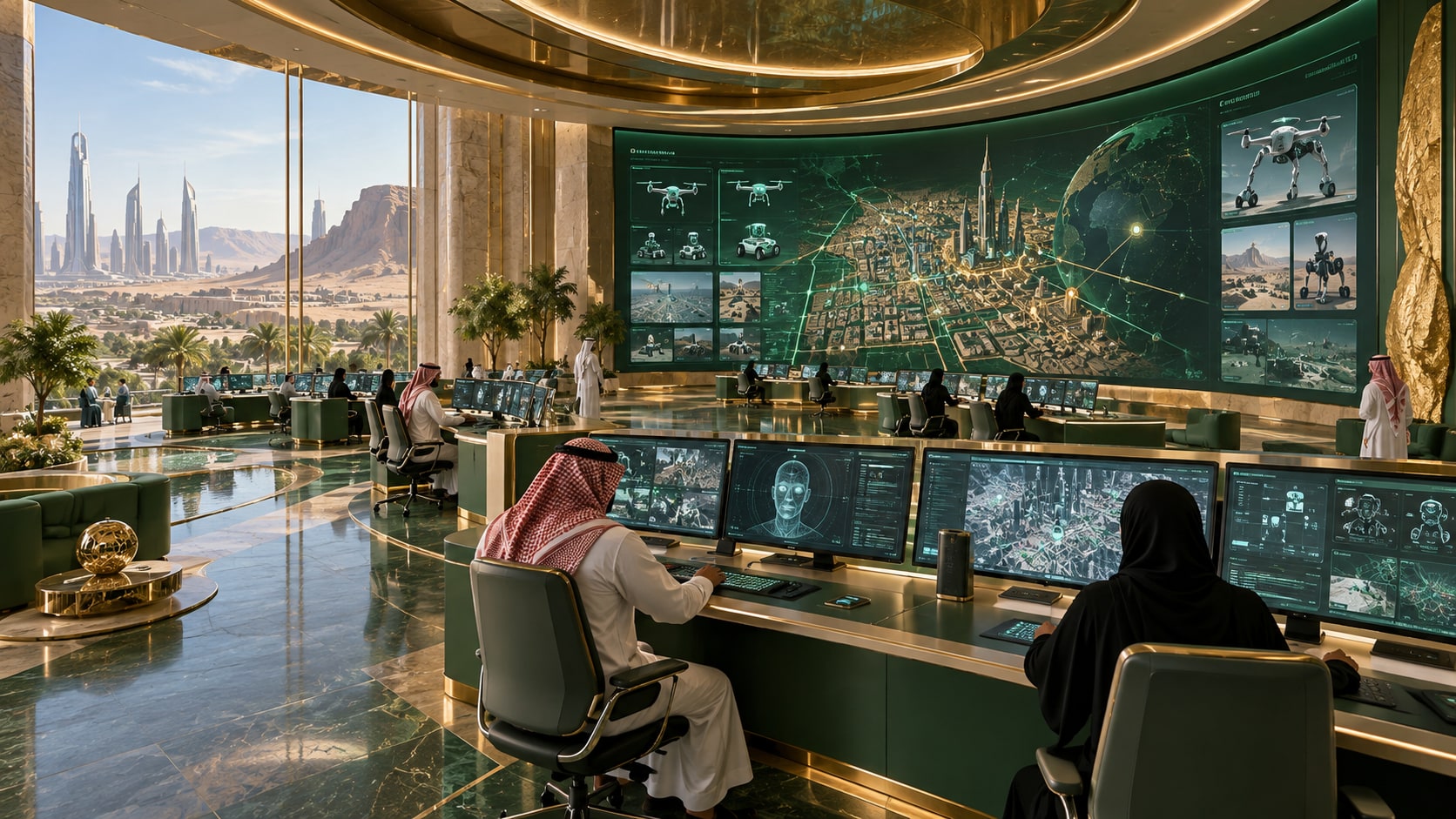
06 / Command and control
The digital heart connecting city facilities
Proposed facility concept
The project proposes a command and control center for robot management, performance monitoring and data analysis. The accompanying profile connects this role with fleet and task coordination, security and connectivity resilience.
Operations management
A connected operational view of robots, tasks, locations and performance.
Protection and recovery
Cybersecurity monitoring, incident response, isolation and safe recovery.
Connectivity resilience
Local offline operation, an isolated emergency network and secure synchronization when connectivity returns.
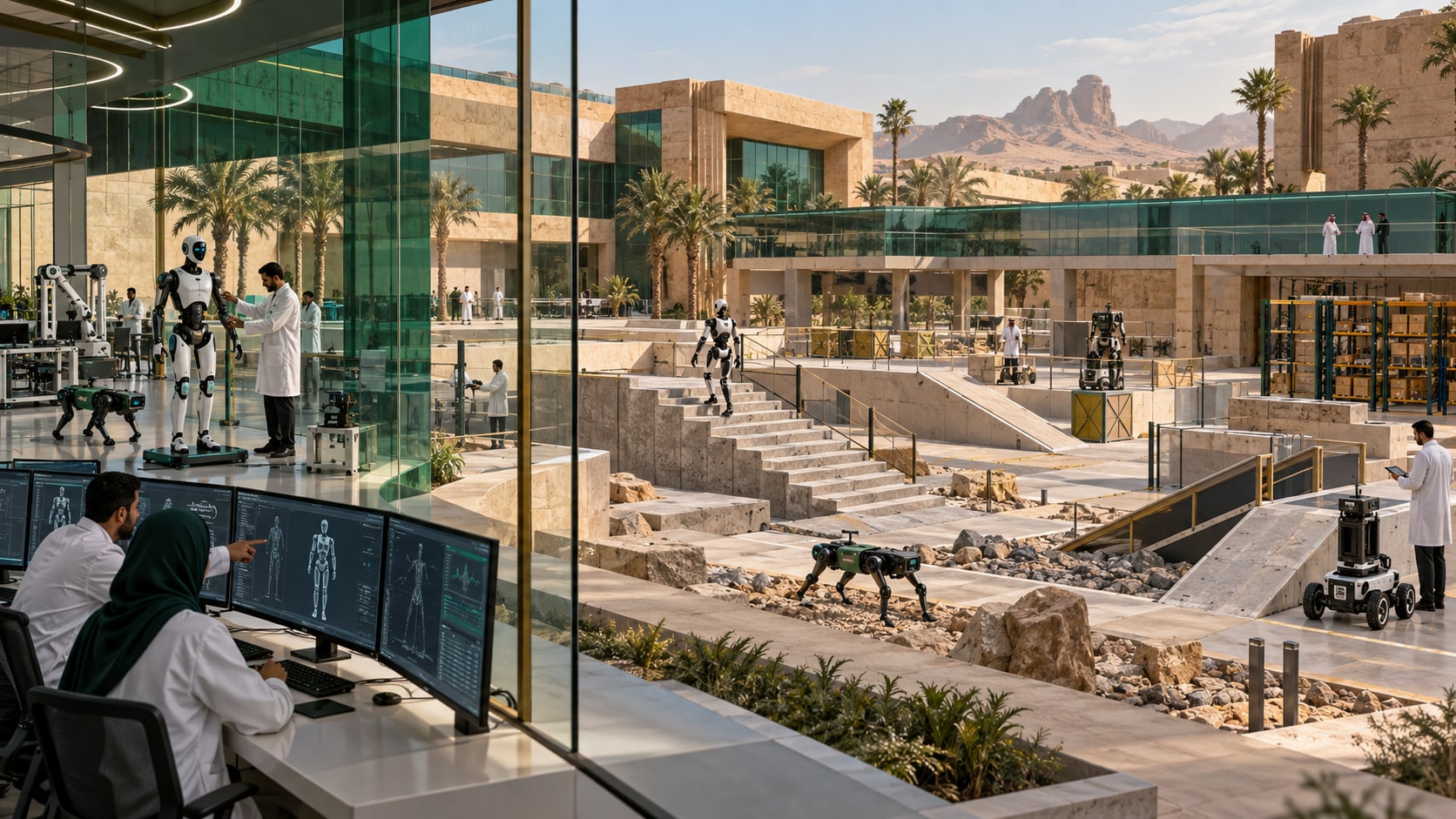
07 / Qualification and simulation
Testing readiness before field deployment
Proposed facility concept
Qualification and simulation are named among the eight sectors in the film. The project profile describes digital and physical environments for testing robots and assessing safety and reliability before field deployment.
Task simulation
Evaluating movement paths and tasks in controlled test environments.
Safety and reliability
Testing collision prevention, performance and responses to changing operating conditions.
Resilience and readiness
Assessing cyber resilience and operational readiness before real-world use.
08 / Robot digital identity
An identity and record for every stage
Proposed facility concept
The concept treats each robot as an intelligent asset with a digital identity and a traceable professional and operational record, connecting design, operation, maintenance, updates, isolation and recovery throughout its lifecycle.
Unique identity
Linking a robot with its owner, task, location and operating permissions.
Lifecycle record
Traceable operating, maintenance, update and test histories with an audit trail.
Trust across transitions
Identity integrated with transport, docking, handover and secure recovery.
Project profile
Tamkeen AI City sectors and projects
A proposed technology and industrial city connecting the robot lifecycle from research and design to manufacturing, identity, operations, maintenance and recovery. The concept includes eight sectors, five factories, five proposed regional centers and 14 innovation families under research and drafting.
AI-generated concept visualization — proposed facilities and services.
01
Robot engineering hospital
Intake, triage and mechanical, electronic and software diagnosis, followed by repair, rehabilitation, cyber isolation where needed and readiness testing before return to service.
AI-generated concept visualization — proposed facilities and services.
02
Industrial complex
Five proposed factories cover robotics, servers and computing systems, semiconductors, smart displays and interfaces, and fiber cables. Feasibility and partners determine each factory’s scope and phasing.
03
Research and development
Laboratories for semiconductors, digital language, interactive robotic skin, human interaction, cybersecurity and advanced industry connect prototypes with testing and manufacturing opportunities.
AI-generated concept visualization — proposed facilities and services.
04
Academy and professional training
Pathways in AI, robotics, software, embedded systems, electronics, data and smart manufacturing, with proposed applied laboratories and practical training.
05
Commerce and visitor experiences
Technology exhibitions, robotic dining concepts, a visitor center and startup and supplier spaces demonstrate applications and connect innovation to customer needs.
06
Command and control
Fleet, task, tracking, security and IoT coordination, with a proposed local operating mode, isolated emergency network and secure synchronization after connectivity returns.
07
Qualification and simulation
Digital and physical environments test tasks, safety, collision prevention, cyber resilience and reliability before field operations.
08
Digital identity and lifecycle
A unique identity connects a robot to its owner, task, location and operating and maintenance history, supporting transport, docking, permissions and audit records.
Proposed footprint and network
The proposed reference footprint is one million square meters: 600,000 for the first phase and 400,000 for expansion. Five proposed regional centers serve central, western, eastern, northern and southern regions. These are estimates subject to study and approval.
Innovation portfolio
Smart mobility and wheelchairs; offline camel-herd management; robot hospital; digital identity; transport and custody; language lexicon; isolation and recovery; cyber resilience; port protection; health reporting; hybrid operations; secure docking; docking and update management; pre-maintenance verification. These are research families, not claims of granted patents or confirmed filings.
An integrated vision for robotics, intelligent infrastructure and human-centered urban life.
Vision and scope
The city concept connects technology, industry and knowledge within a coherent urban environment. Development begins with understanding how people live, work and learn.
Planning priorities include digital infrastructure, mobility, services and innovation spaces, with attention to scalability, safety and quality of experience.
Development approach
Understand the need
Define the intended users, priorities and scope before selecting solutions.
Connect expertise
Identify suitable capabilities and partners, with clear responsibilities and requirements.
Review and improve
Evaluate readiness, test within the agreed scope and use findings to guide the next stage.
Working pathway
Identify needs and define the project scope.
Study technical and operational requirements.
Establish roles and appropriate partnerships.
Review readiness before implementation or external integration.
Monitor outcomes and refine the approach.
A development concept. Implementation and external connections depend on readiness, applicable requirements and authorized agreements. Activity images are visual concepts, not evidence of completed projects.